Chapter 4
When one artist isn’t enough
At first, Gary tries to ignore it.
Most records have one artist.
That’s how he’s been thinking about them.
But every now and then, one doesn’t fit.
The uncomfortable records
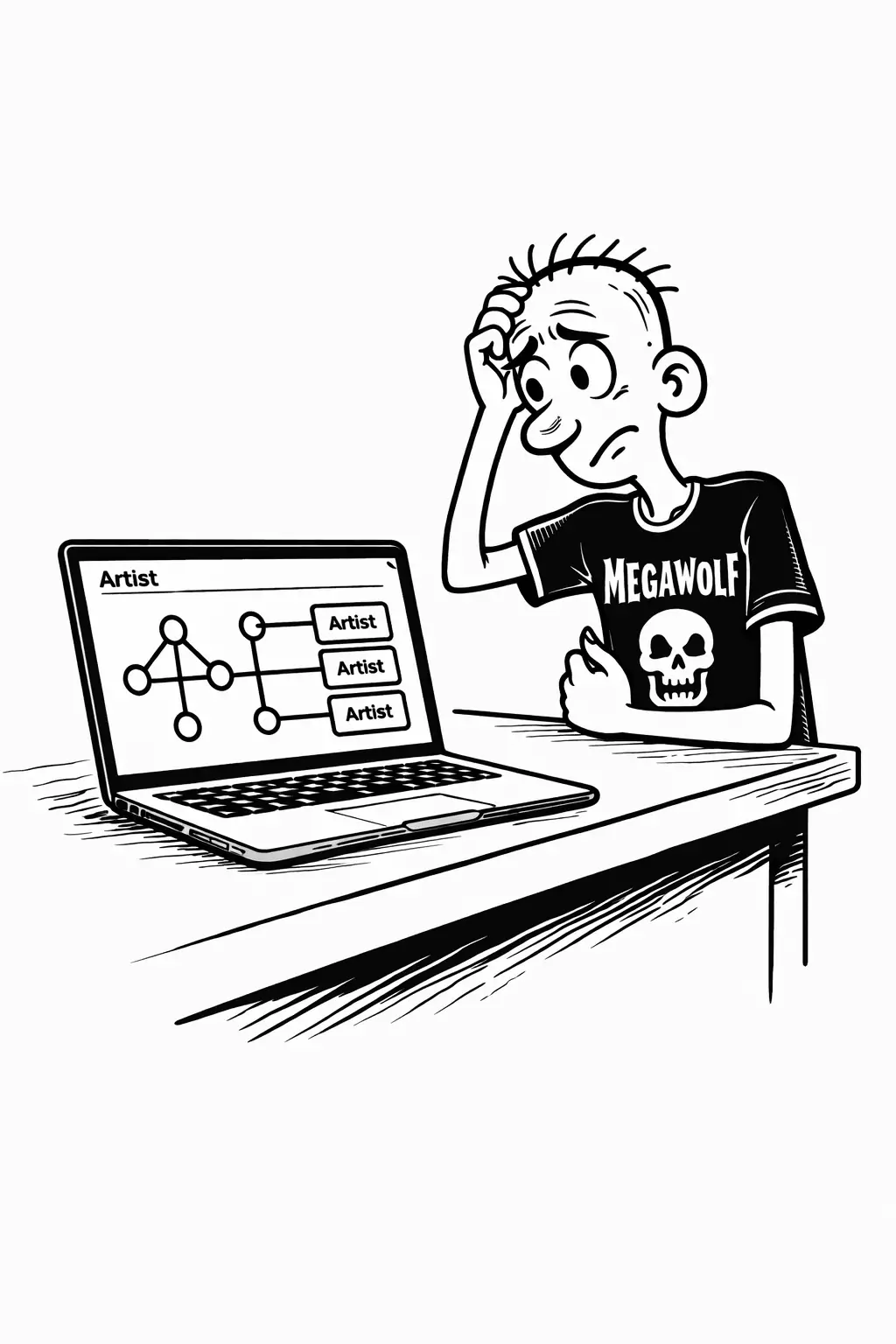
Gary adds a new record.
It’s a collaboration.
Two artists, equally important.
He pauses.
He looks at the artist column.
Then he does what feels easiest.
He picks one.
The record shows up in searches.
Nothing breaks.
But Gary knows it’s not quite true.
The other artist is missing.
Making room the obvious way

The next time it happens, Gary tries something else.
He adds another column.
Artist
Artist 2
That works — sort of.
Until it doesn’t.
Some records only need one.
Some need two.
One needs three.
The table starts to stretch sideways.
Fixing an artist name now means checking multiple columns.
Searching feels less reliable again.
The old feeling returns.
Not broken.
Just uncomfortable.
Sam asks a different question

Sam notices Gary hesitating over the keyboard.
“What’s wrong?” he asks.
Gary explains.
“Some records have more than one artist,” he says.
“And some artists show up on lots of records.”
Sam nods.
Then asks:
“Is that information about the record…
or about the connection between the record and the artist?”
Gary stops.
He hadn’t thought about it that way.
Giving the connection its own space
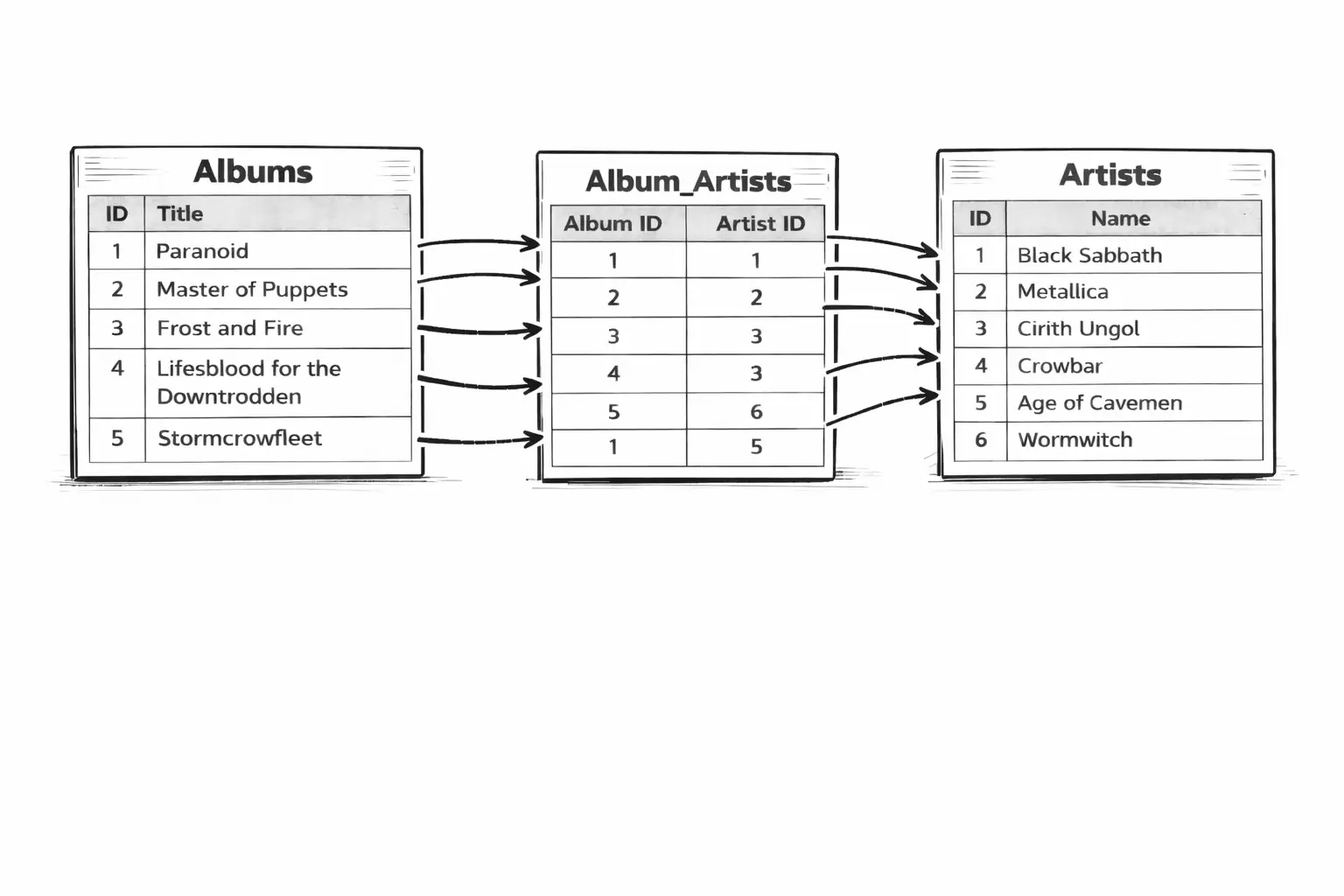
Sam suggests a small change.
Not a new column.
A new list.
One that doesn’t describe records.
And doesn’t describe artists.
It just lists connections.
This record — that artist.
That record — this artist.
One row per connection.
Gary looks at the screen.
Records on one side.
Artists on the other.
And between them, a short list linking the two.
No names repeated.
No guessing which column to check.
The shape finally matches reality
Gary adds a collaboration.
Two rows appear in the connection list.
Nothing else changes.
Search still works.
Fixing an artist still works.
And now, the record finally tells the truth.
Not by being more complicated —
but by letting the connection speak for itself.
What Gary notices
Gary doesn’t feel clever.
He feels relieved.
He didn’t add more rules.
He didn’t add more discipline.
He just stopped forcing one row
to explain something that wasn’t one-to-one.
The structure finally matches how things actually work.
Continue reading
In the next chapter, nothing breaks.
Gary doesn’t add a new table. He doesn’t discover a new rule.
He just notices something different.
He’s no longer guessing. The structure feels familiar. Decisions come faster.
For the first time, Gary isn’t reacting to problems — he’s thinking ahead.