Chapter 21
When the system must say no
Gary doesn’t turn on the laptop right away.
When Sam arrives, they sit at the counter with coffee.
No screen.
No rush.
“This part matters,” Gary says.
“So I don’t want to do it halfway.”
Sam nods.
Gary starts with intent, not rules
Gary doesn’t describe logic.
He describes outcomes.
“I want prices to make sense.”
“I want every record to belong to an artist.”
“I want Hank to move fast —
but not break anything important.”
He pauses.
“And when something is allowed as an exception,” he adds,
“I want that to be deliberate.
Not accidental.”
“Then we don’t start with stopping”
When Gary finishes, Sam answers carefully.
“If we start with blocking,” he says,
“we’ll get it wrong.”
Gary looks up.
“Before the system can stop anything,” Sam continues,
“it needs to understand situations.”
Classifications: how Minyu understands reality
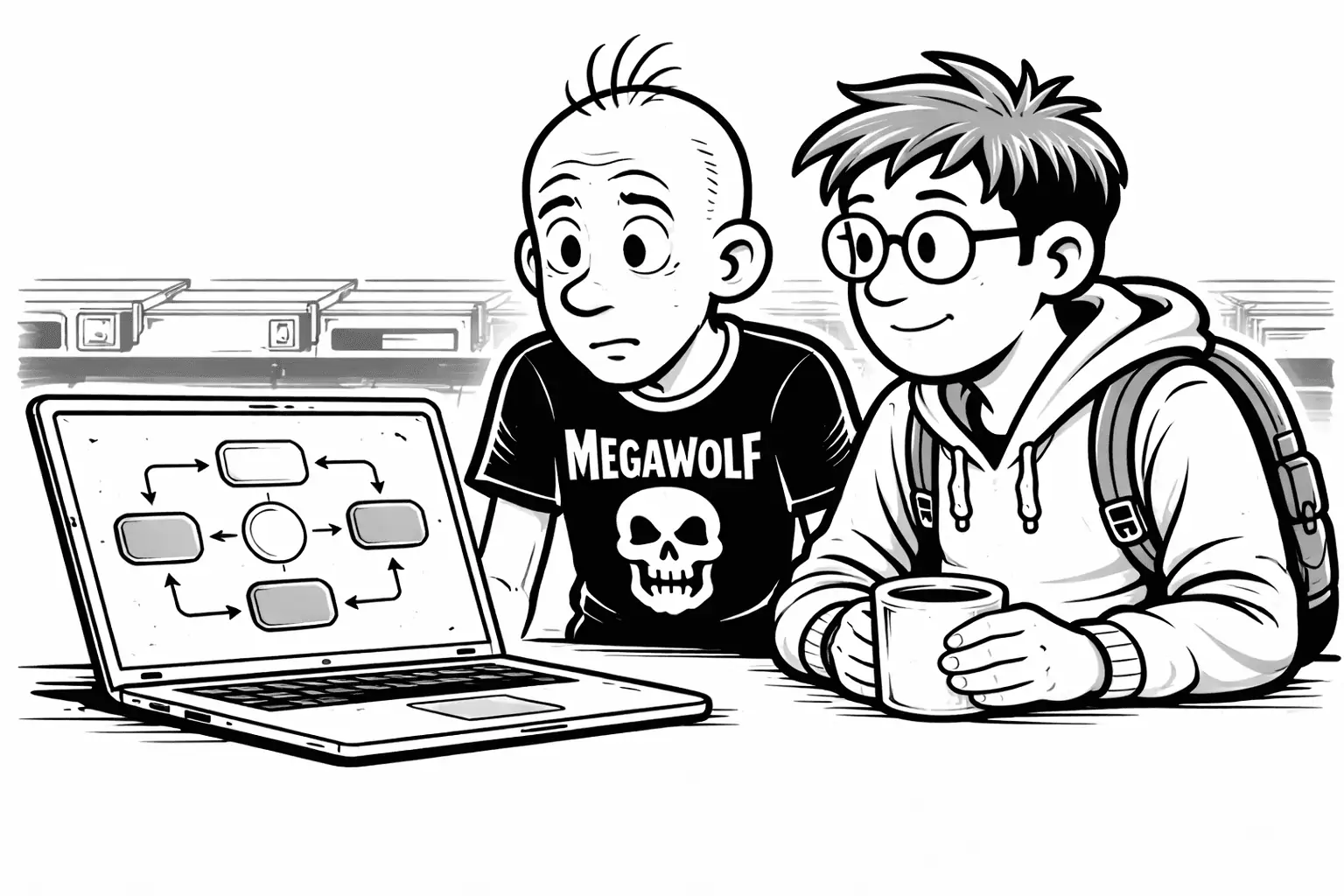
Sam keeps it concrete.
“A classification is a named condition
that evaluates to true or false.”
Nothing more.
It doesn’t block.
It doesn’t warn.
It doesn’t grant access.
It just describes what is.
Sam adds a simpler comparison.
“This is how we describe the world every day,” he says.
- this customer is a senior (age over 65)
- this order is overdue (due date in the past)
- this record is rare (only a few copies exist)
- this artist is active (has released something recently)
- this product is discontinued (no longer sold)
None of these change the thing itself.
They explain it.
“It’s metadata,” Sam says.
“Information about the data.”
If the facts change,
the description changes with them.
Gary nods slowly.
“So it’s not a rule yet,” he says.
“It’s a fact.”
“Exactly,” Sam replies.
Three ways Gary already thinks about rules
Sam doesn’t introduce new ideas.
He points out patterns Gary already uses.
Value classifications
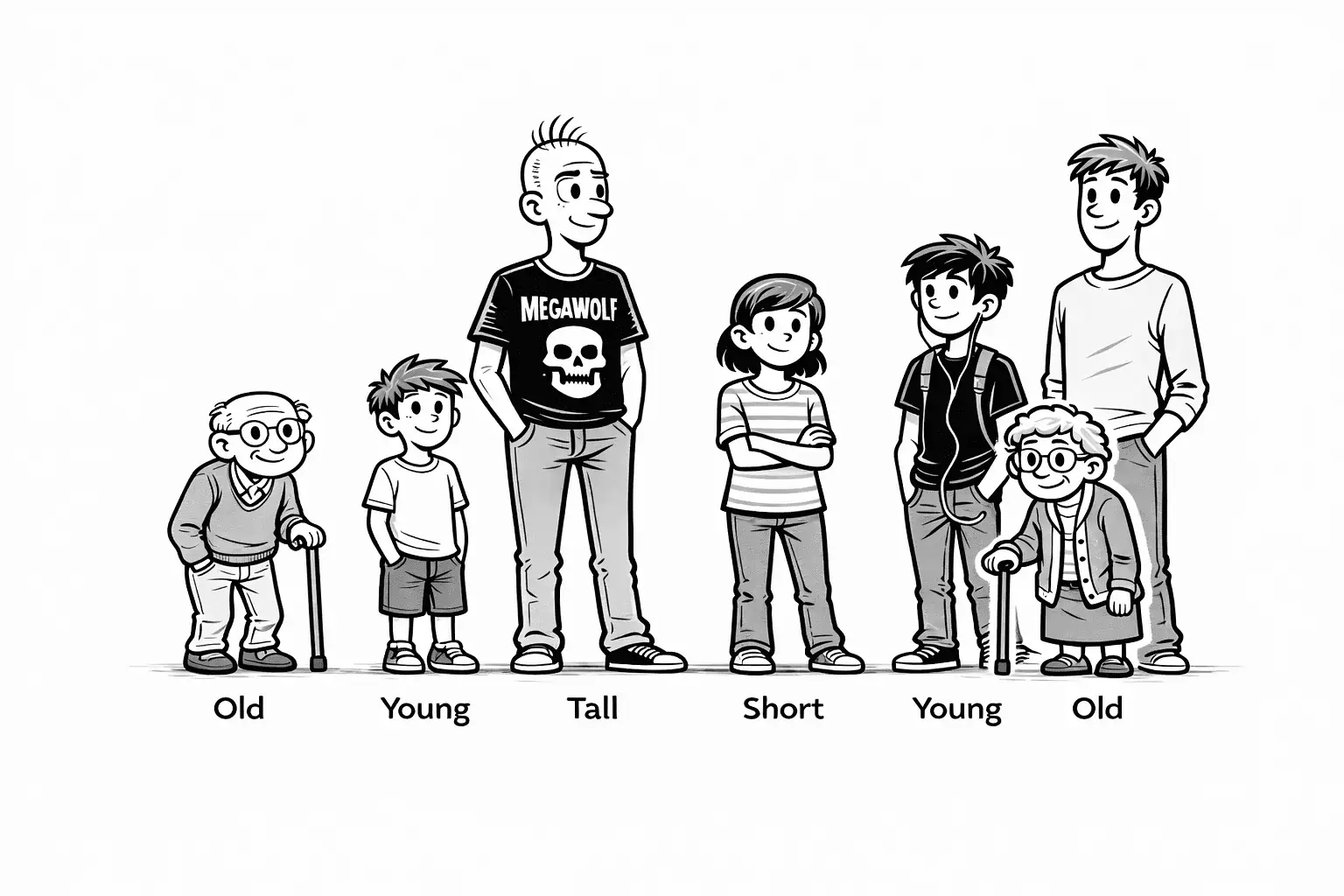
“Some things only depend on one value,” Sam says.
- age is over 65
- price is greater than zero
- title is not empty
“These don’t look at the rest of the row,” he adds.
“And they don’t care about other tables.”
They simply describe
what a single value means.
Relational classifications
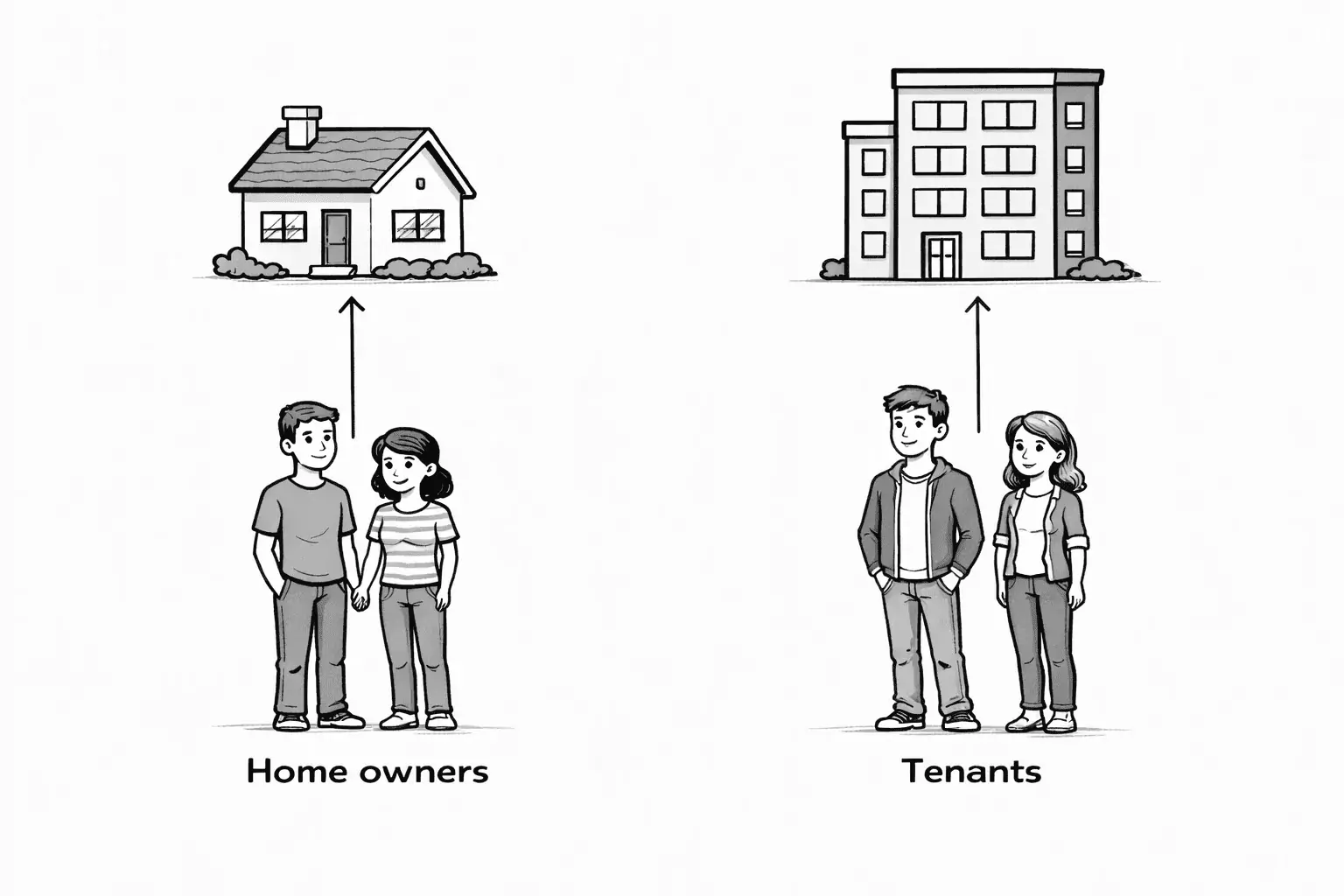
“Other things only make sense in context,” Sam says.
- record has an artist
- artist has at least one record
He adds a few everyday examples.
- a customer is a repeating customer (has more than one order)
- a person is a manager (is linked to at least one employee)
- a product is in stock (is linked to a warehouse with quantity > 0)
- an order is fulfilled (is linked to a completed delivery)
None of these can be decided
by looking at one value
or even one row.
They depend on relationships.
“These classifications don’t ask
‘what is this?’” Sam says.
“They ask
‘how does this relate to other things?’”
Logical classifications
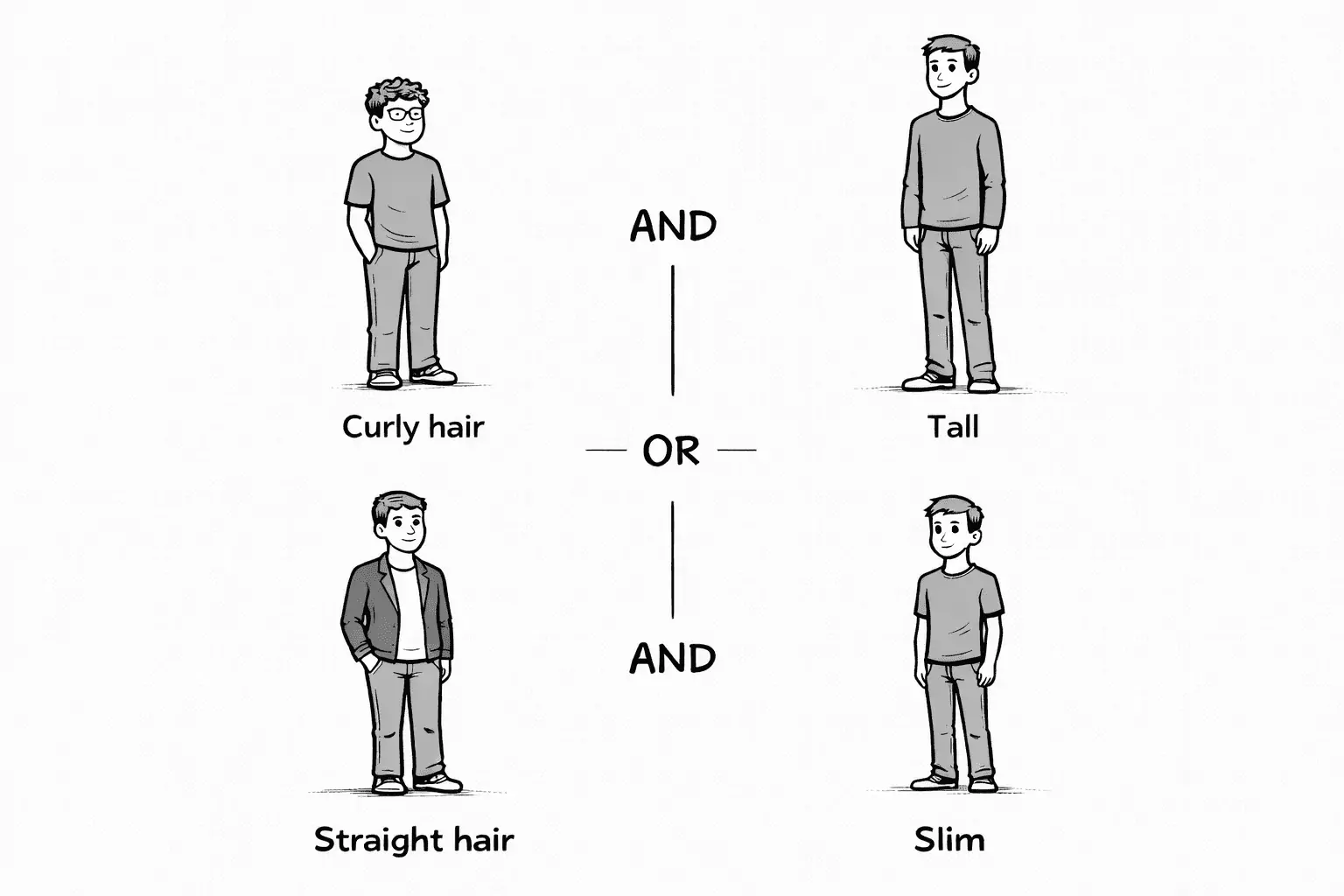
“And then there are the combinations,” Sam continues.
“These don’t introduce new facts,” he says.
“They combine ones you already trust.”
Gary recognizes them immediately.
Real-world examples come easily:
-
a customer is eligible for discount
(is a senior AND is a repeating customer) -
an order is ready to ship
(is paid AND is in stock AND NOT cancelled) -
a user is inactive
(is registered BUT NOT logged in recently) -
a record is safe to publish
(is complete AND approved AND NOT flagged)
Each input is already known.
Each result is derived.
“These are the rules you used to keep in your head,” Sam says.
“Now they’re explicit.”
Nothing is recalculated twice.
Nothing is copied.
The system just combines truths
the same way people do —
only consistently.
Nothing is enforced yet
Sam is explicit.
“At this stage,” he says,
“we’re not telling the system what to stop.”
“We’re teaching it
how to recognize situations.”
Every classification they define now
can later be reused:
- for filtering
- for visibility
- for enforcement
Nothing is duplicated.
Nothing is hidden.
Continue reading
Now that Gary understands
how Minyu describes reality,
the next question becomes unavoidable.
Which situations
should actually stop work?