Chapter 2
When customers start calling
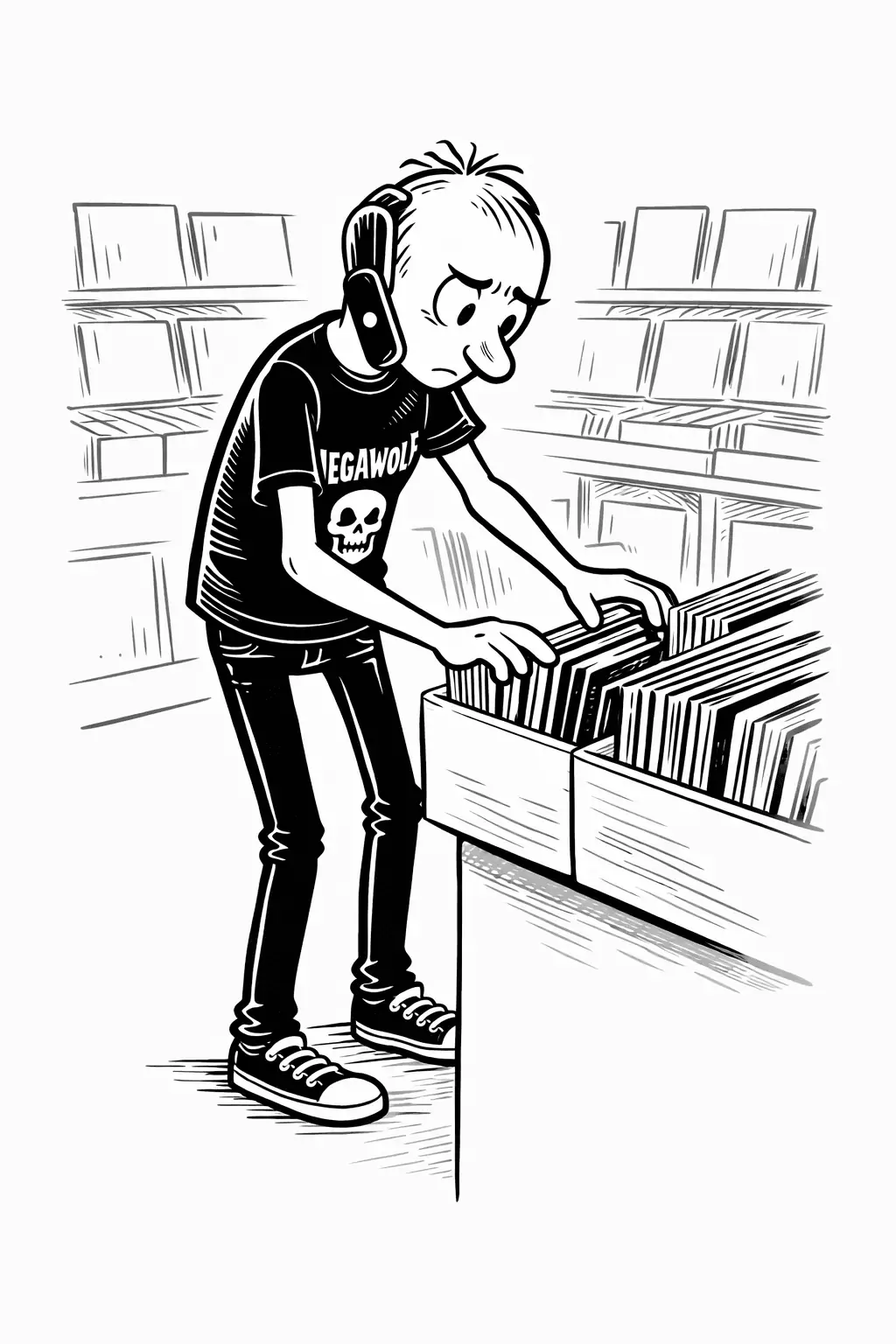
To sell more records, Gary places small ads in the local paper.
Nothing flashy.
Just a short list of rare pressings.
Hard-to-find albums.
Things collectors might care about.
The response is immediate.
Some customers come by the store.
Many more pick up the phone.
“Hi, I saw your ad. Do you still have that one?”
Gary answers the phone the same way every time.
“Just a second.”
The cost of checking
The records might still be there.
Or they might not.
Someone could have bought one yesterday.
Lisa might have sold one earlier that day.
Gary might remember — or almost remember.
So Gary checks.
He walks to the shelf.
He scans the section.
Sometimes he finds it right away.
Sometimes he doesn’t.
Nothing is broken.
But answering a simple yes-or-no question
now takes several minutes.
And when it happens ten times a day,
those minutes add up.
The same question, over and over
By the end of the week, Gary notices a pattern.
The calls are not complicated.
They are all variations of the same question:
“Do you still have this record?”
Gary realizes something slightly uncomfortable.
He owns the records.
He just doesn’t have a fast way to know what he owns right now.
The notebook doesn’t help.
The notes were never meant for this.
Sam suggests something simple
That afternoon, Sam stops by.
Gary explains the situation.
He doesn’t complain.
He just describes the walking.
The checking.
The repeating himself.
Sam listens.
Then says:
“Have you thought about listing the records somewhere?”
Gary raises an eyebrow.
“Like… all of them?”
Sam nods.
“Just enough so you can look things up.”
A very ordinary spreadsheet
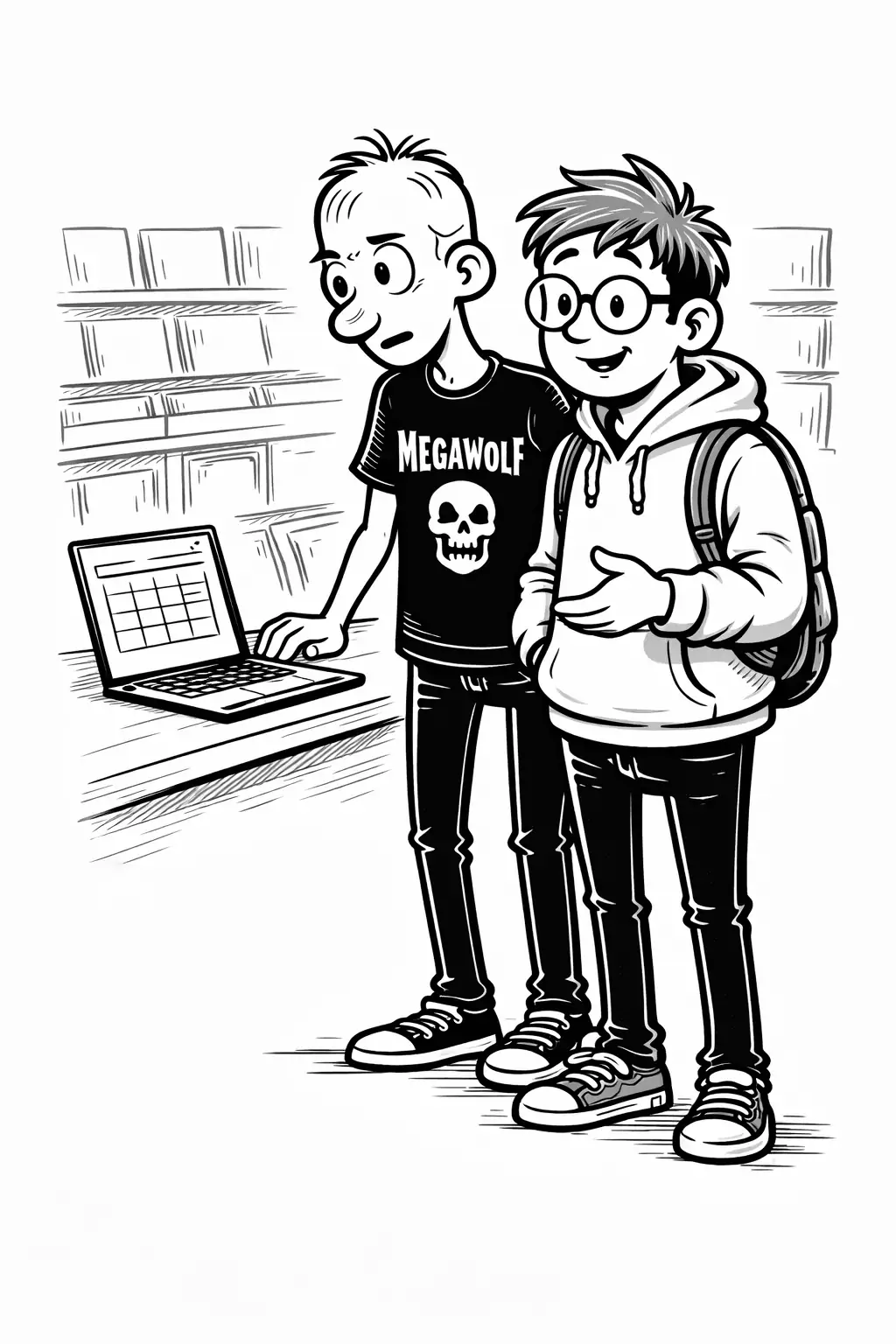
Sam opens Excel.
Rows.
Columns.
Nothing fancy.
“One row per record,” Sam says.
“Then you can search instead of checking shelves.”
Gary watches.
This feels… reasonable.
He starts entering records.
Title.
Artist.
Genre.
Price.
No rules.
No structure beyond columns.
Just a catalogue.
Confidence arrives quickly

The next time the phone rings, Gary doesn’t move.
He searches.
The answer is instant.
Gary smiles.
Excel hasn’t changed the store.
It has changed how fast he can answer.
He feels something new.
Control.
Where this is heading (quietly)
Gary is not thinking about systems.
He is not thinking about modeling.
He is just enjoying how reassuring
rows and columns feel.
Sam notices this.
He doesn’t interrupt.
This is where the journey begins.
Continue reading
In the next chapter, Gary gets comfortable with the spreadsheet.
Comfortable enough to clean things up.
Comfortable enough to fix small annoyances as they appear.
That’s when he notices something strange:
the same artist keeps showing up —
spelled differently each time.