Chapter 1
A normal day at Gary’s Records

Gary’s record store is not a complicated place.
It opens in the morning.
Records are unpacked, sorted, and put back where they belong.
Customers come in, browse, listen, talk.
Gary knows most of them.
He knows who always checks the jazz section first.
He knows who asks about new pressings.
He knows who just wants to talk for a while.
Nothing here feels rushed.
How things work
Gary does not use any special tools.
There is no system.
There is no software running the store.
When something needs to be remembered, Gary writes it down.
A notebook behind the counter.
A few loose pieces of paper.
Sometimes a note placed somewhere visible.
It’s simple.
It’s familiar.
And it works.
Not because it is organized —
but because Gary is.
Lisa helps out
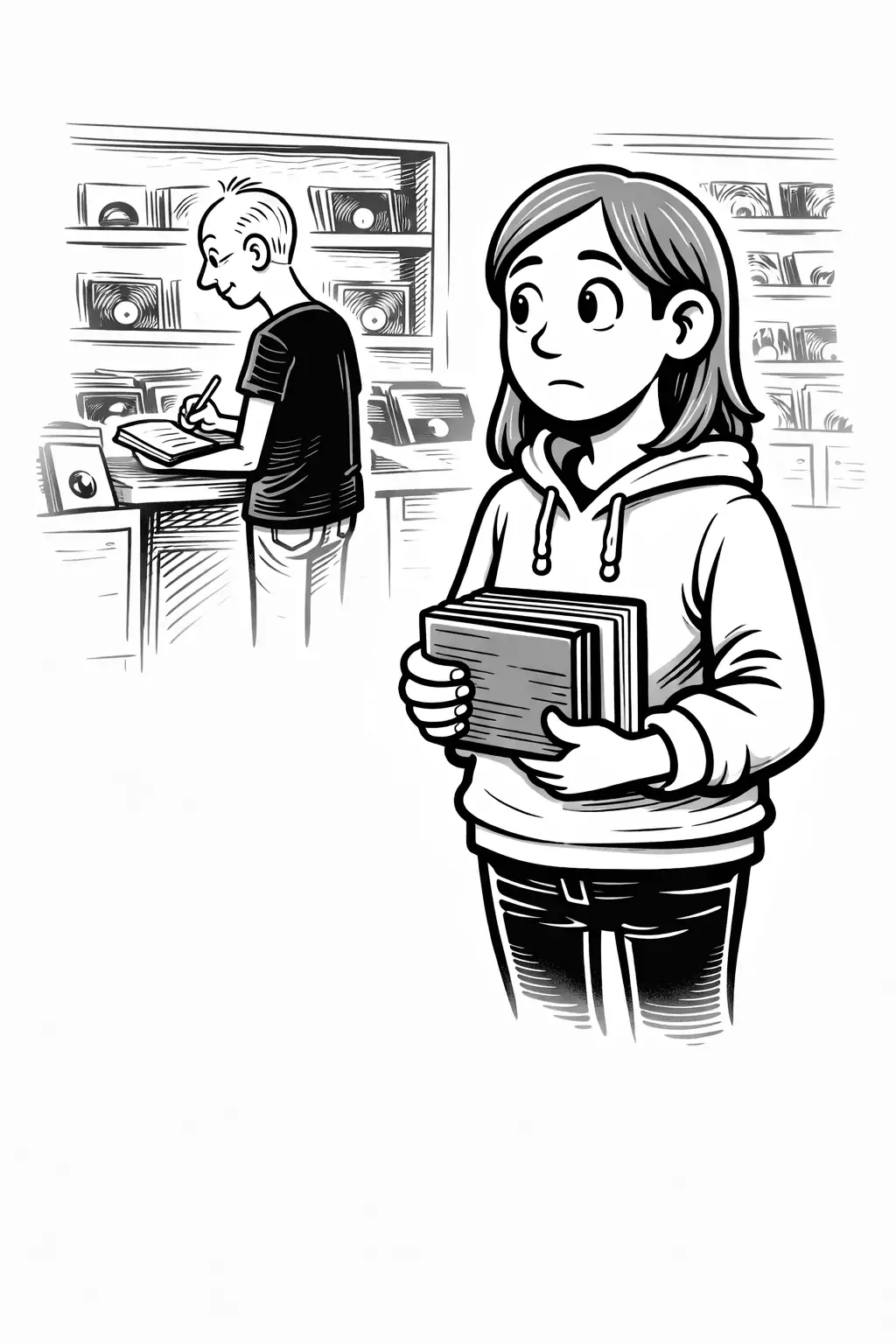
Lisa works part-time in the store.
She helps customers find records.
She restocks shelves.
She answers questions when she can.
When she is unsure, she asks Gary.
Gary answers without hesitation.
Most of the time, the answer feels obvious.
Nothing feels like a problem
There are no major issues.
No one is complaining.
No one is waiting for a system to be built.
Gary enjoys the store.
He enjoys knowing where things are.
He enjoys being the person people ask.
From the outside, everything looks fine.
And from the inside, it feels fine too.
What this book is not about
This is not a story about failure.
Gary is not doing anything wrong.
The store is not broken.
There is no dramatic moment where everything collapses.
This matters.
Because the changes that follow
don’t come from disaster —
they come from growth.
Continue reading
In the next chapter, Gary tries to sell more records.
He puts ads in the local paper.
Collectors start calling.
Nothing is broken —
but answering a simple question now takes time.